Three Carvings
Introduction
The Three Carvings refer to the traditional Chinese crafts of stone, wood, and brick carving. These intricate carvings are deeply embedded in the architectural heritage of the Huizhou region, known for its aesthetically pleasing and structurally sophisticated buildings. The most renowned among these is wood carving, with a history spanning over a millennium, and it was recognized as a national intangible cultural heritage in 2006. The carvings are not merely decorative; they encapsulate numerous cultural narratives and aspirations, depicting auspicious patterns that reflect the evolving tastes and desires of the people throughout history.
Historical Background
The tradition of the Three Carvings has its roots in the Huizhou area, flourishing particularly during the Ming (1368-1644) and Qing (1644-1911) dynasties. Huizhou, a historical prefecture straddling the border between southern Anhui and northern Jiangxi provinces, became a center of commerce and culture, attracting skilled artisans and craftsmen. As the Huizhou merchants achieved great success in trade, they invested their wealth in the construction of luxurious homes, adorned with exquisite carvings that represented prosperity, morality, and aesthetic beauty. This legacy has left an indelible mark on the cultural landscape of China.
Types of Carvings
Stone Carvings
Stone carvings are traditionally found on pillar bases and in ancestral temples, as well as on paifang, or memorial arches. These carvings are typically robust and durable, crafted to endure the test of time. They depict significant cultural and historical narratives, such as the famous views of Hangzhou's West Lake, which were replicated in stone carvings by artisans to bring a piece of distant beauty to their local communities. The stone carvings serve as a testament to the skill and artistry of Huizhou craftsmen.
Wood Carvings
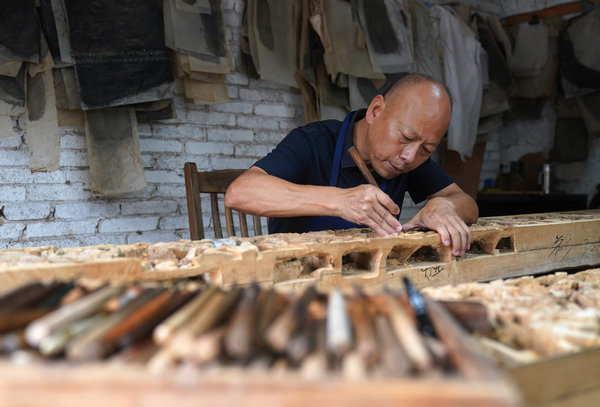
Wood carving is regarded as the most important among the Three Carvings. It is characterized by intricate designs and a high degree of craftsmanship. The wooden architectural elements, such as beams and window frames, are meticulously carved to portray stories and patterns that hold significant cultural meanings. The mortise-and-tenon joints used in these wooden structures are a hallmark of Huizhou architecture, ensuring both durability and artistic expression.
Brick Carvings
Brick carvings are often used to embellish the entrances of residences, showcasing the status of the homeowners. Known for their multi-layered designs, brick carvings create a three-dimensional effect that adds depth and dynamism to the architecture. The layered technique requires great skill, as demonstrated by craftsmen like Wu Zhenghui, who have mastered the art of carving intricate scenes and patterns into brick.
Techniques and Craftsmanship
The techniques employed in the Three Carvings are as varied as they are sophisticated. Huizhou wood carving is known for its simplicity and elegance, with smooth lines and detailed imagery that convey a poetic beauty. Brick carving involves a multi-layered approach that enhances the visual impact of the artwork, while stone carving is distinguished by its durability and the skilled depiction of complex narratives. Craftsmen like Kuai Zhenghua and Wu Zhenghui have dedicated their lives to mastering these techniques, ensuring the continued legacy of these traditional crafts.








